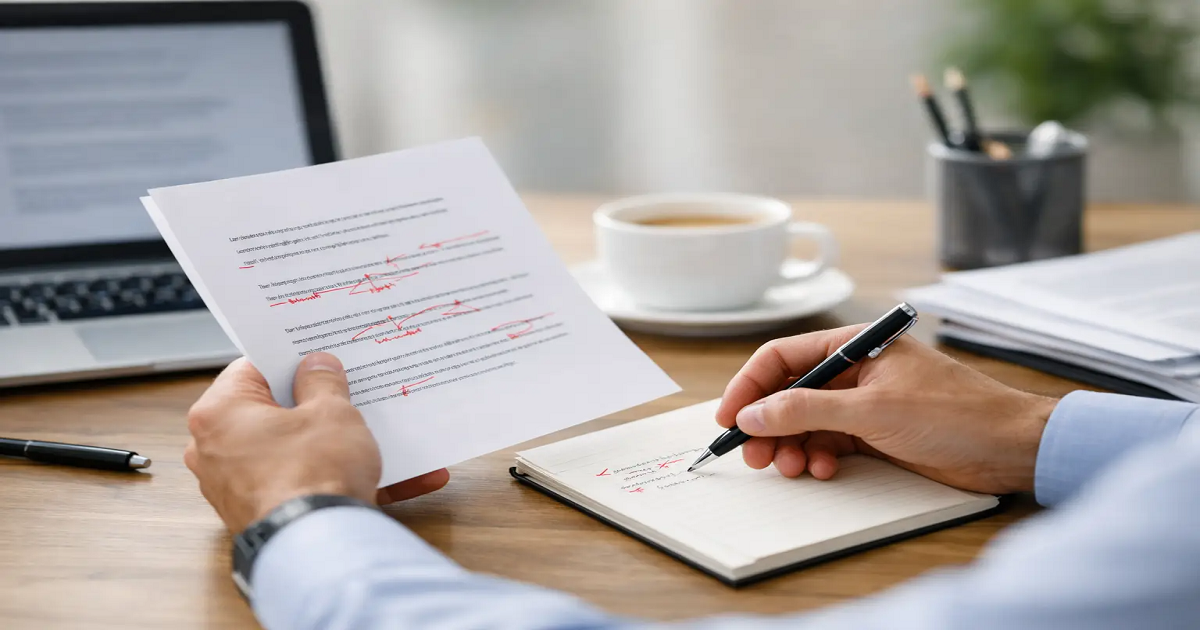
A sentence can lose the reader in seconds. One extra clause, one vague word, or one awkward phrase is often enough to make useful content feel harder than it should. If you want to know how to rewrite sentences clearly, the goal is simple: make each line easy to read the first time, without forcing the reader to decode what you meant.
That matters whether you are writing product descriptions, blog posts, emails, landing pages, essays, or SEO content. Clear sentences keep people moving. They reduce friction, improve trust, and help your message do its job faster.
What clear sentence rewriting actually means
Rewriting for clarity is not about making every sentence shorter or more formal. It is about removing anything that slows understanding. Sometimes that means cutting words. Sometimes it means changing word order. Sometimes it means replacing abstract language with something more specific.
A clear sentence tells the reader who is doing what, why it matters, and what to do next if action is needed. If a sentence feels crowded, vague, or stiff, it usually has one of three problems: too many ideas, weak structure, or unnecessary wording.
For example, "The report was created for the purpose of helping the team in regard to improving performance" says very little in a lot of words. "The report helps the team improve performance" says the same thing faster and better.
How to rewrite sentences clearly without changing the meaning
The safest way to edit a sentence is to keep the original meaning fixed while improving the delivery. That sounds obvious, but many rewrites fail because they make the sentence sound cleaner while quietly changing the point.
Start by asking one question: what is this sentence really trying to say? If you cannot answer that immediately, the reader will struggle too. Once the core message is clear, rebuild the sentence around that message and remove anything that does not support it.
Take this sentence: "Due to the fact that our team was experiencing delays in relation to content approval, the campaign launch was moved to next week." The main idea is not the delay itself. The main idea is the moved launch. A clearer version is: "We moved the campaign launch to next week because content approval was delayed."
The meaning stays intact, but the sentence becomes easier to process.
Put the main point near the front
Readers usually understand a sentence faster when the subject and verb appear early. If the line opens with filler, context stacking, or a long dependent clause, the point arrives too late.
Instead of writing, "After reviewing the feedback submitted by customers over the last quarter, several updates to the checkout process were identified by the team," write, "The team identified several checkout updates after reviewing last quarter's customer feedback."
The second version gets to the actor and action sooner. That makes the sentence feel cleaner even though the information is nearly identical.

Cut filler phrases that add weight but not value
A lot of unclear writing comes from habits rather than intent. Writers lean on phrases like "in order to," "due to the fact that," "it is worth mentioning that," or "for the purpose of." These expressions sound busy, but they rarely help.
You can usually replace them with one simpler word or remove them completely. "In order to improve rankings" becomes "to improve rankings." "At this point in time" becomes "now." Small cuts like these quickly improve rhythm and readability.
This is especially useful for web content, where dense sentences can hurt engagement. Readers scan first. If a sentence feels slow, they move on.
Replace vague words with specific ones
Words like "things," "stuff," "various," "some," and "good" often weaken a sentence because they force the reader to guess. Specific wording creates clarity faster than extra explanation.
Compare "We made some changes to improve results" with "We shortened the signup form to increase conversions." The first sentence is broad and forgettable. The second is concrete and useful.
Specific language is not always longer. In many cases, it is shorter because it removes guesswork.
Common sentence problems that make writing unclear
Most unclear sentences fall into patterns. Once you recognize them, editing gets much faster.
One common problem is overload. A sentence tries to explain background, action, exceptions, and outcome all at once. When that happens, split it. Two clean sentences almost always beat one overloaded sentence.
Another issue is passive construction. Passive voice is not always wrong, but it often hides responsibility or weakens momentum. "The article was edited by the team" is fine. "The team edited the article" is stronger and more direct. If the actor matters, name it.
There is also the problem of stacked modifiers. A phrase like "high-quality customer-focused growth-driven digital content strategy" may look impressive, but it is hard to parse. When too many descriptive words pile up, the sentence stops sounding precise and starts sounding inflated.
Then there is false sophistication. Some writers think complex wording sounds more professional. In practice, the opposite is usually true. Clear writing feels more confident because it does not hide behind jargon.
A practical method you can use on any sentence
If you need a repeatable process, use this five-step approach.
First, identify the core message. What is the one thing the reader needs to understand?
Second, find the subject and verb. If they are buried, move them closer to the front.
Third, remove filler and repetition. If two phrases do the same job, keep the better one.
Fourth, check whether the sentence contains more than one idea. If yes, split it.
Fifth, read it out loud. If you run out of breath or lose the thread halfway through, the sentence still needs work.
This method is fast enough for daily use and flexible enough for everything from academic writing to ecommerce copy.
How tools can help you rewrite sentences clearly
Manual editing is essential, but tools can save time when you are working through a lot of copy. A grammar checker can catch awkward structure, repeated words, and punctuation issues. A paraphrasing tool can offer alternate versions when a sentence feels stuck. A readability check can help you spot lines that are too dense for your audience.
The key is to use tools as support, not as a final decision-maker. Automated suggestions can improve flow, but they do not always understand tone, context, or intent. That is where judgment matters.
For example, a tool may shorten a sentence so aggressively that it loses nuance. In marketing copy, that can flatten persuasion. In academic or legal writing, it can reduce precision. The better approach is to review each suggestion and ask whether it improves clarity without weakening meaning.
For busy teams, freelancers, and site owners, this balance matters. Fast editing is valuable, but only if the final sentence still sounds human and accurate. Platforms like Small SEO Tools UK are useful in this workflow because they give quick browser-based support without adding software friction.
When shorter is better, and when it is not
Many guides treat short sentences as the answer to everything. They help, but they are not the whole strategy. A sentence should be as long as it needs to be and no longer.
Short sentences are great for instructions, calls to action, product copy, and high-scan web content. They create speed. They also reduce the chance of confusion.
Longer sentences can still be clear when they are well-structured. If the logic flows naturally and the reader can track the idea from start to finish, length is not the real problem. Poor structure is.
That is why rewriting for clarity is not just sentence trimming. It is sentence control. You are shaping rhythm, emphasis, and comprehension at the same time.
Clear writing is a competitive advantage
If your writing has a job to do, clarity affects performance. A clear product description reduces hesitation. A clear blog post improves time on page. A clear outreach email gets read instead of ignored. A clear assignment earns better marks because the idea survives the delivery.
This is especially true when you are publishing at scale. The more content you produce, the more costly unclear writing becomes. Confusing sentences slow editing, weaken trust, and make good ideas work harder than necessary.
Learning how to rewrite sentences clearly is not just a writing skill. It is an efficiency skill. It helps you communicate faster, edit smarter, and publish cleaner work without adding complexity.
The next time a sentence feels off, do not just make it sound nicer. Make it easier to understand on the first read. That is usually where better writing starts.