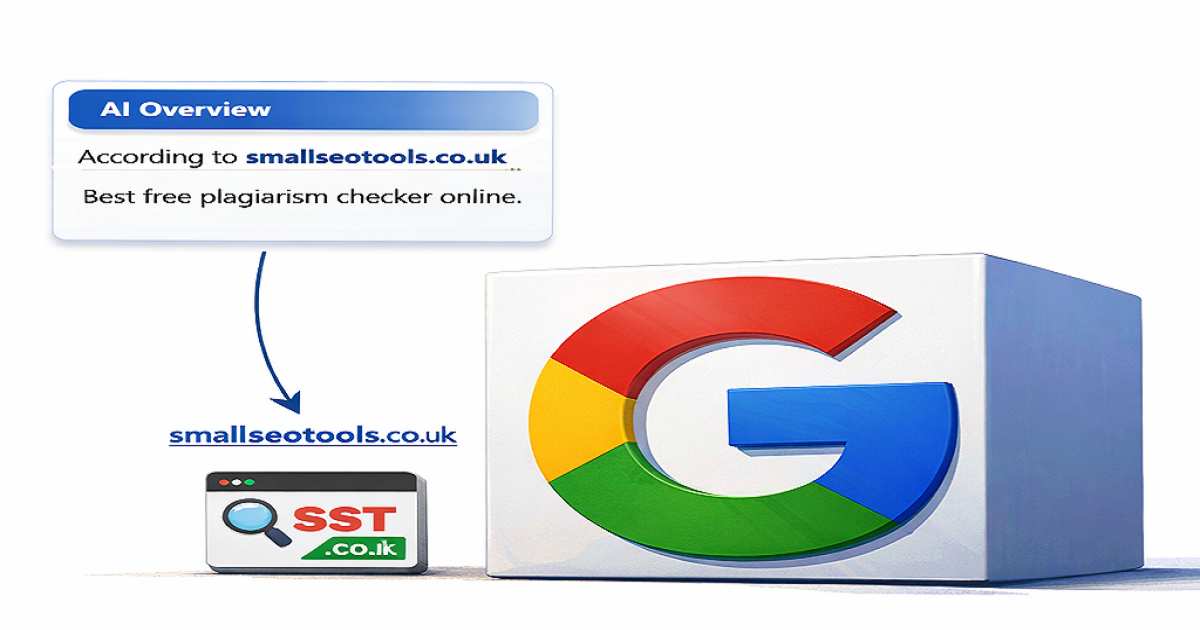
 You don't need a big website to show up in Google AI Overviews. You just need the right content. Small sites get cited every day. This guide shows you how.
50%+of Google searches now trigger AI Overviews
35%more clicks for brands cited in AI Overviews
46.5%of cited URLs rank outside the top 50
4–8 wks average time to first AI citation
What Are AI Overviews (SGE) and Why Do They Matter?
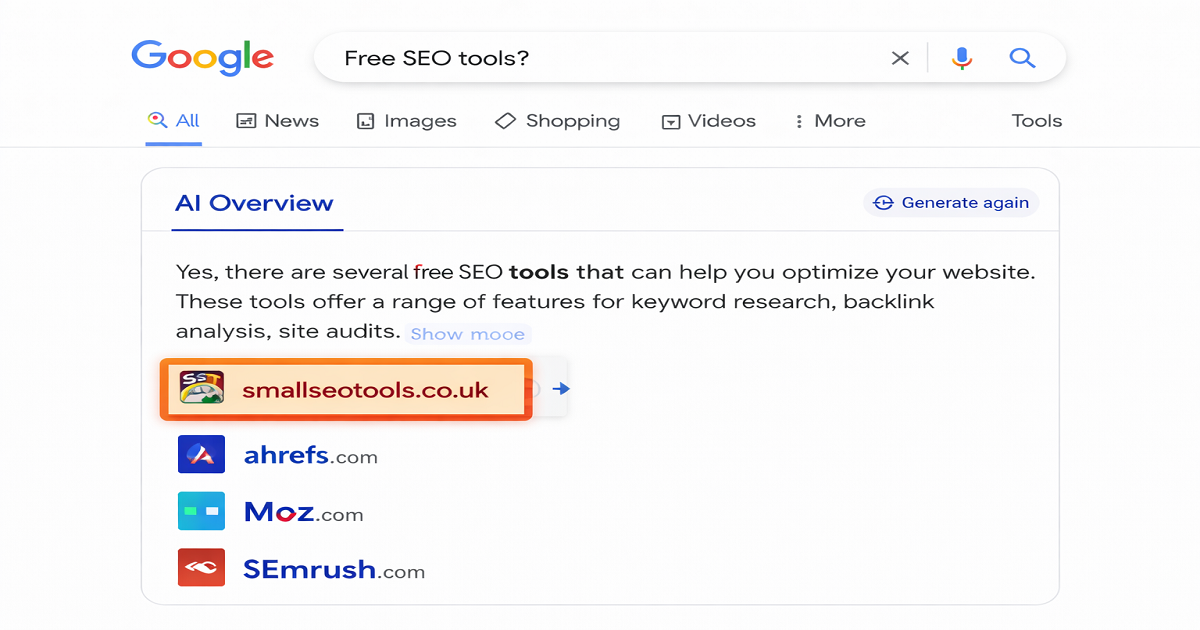
Google AI Overviews used to be called SGE. SGE stands for Search Generative Experience. The name changed but the idea is the same. It is an AI box that shows up at the very top of Google. It gives users a quick answer. It also links to the websites it pulled that answer from. Those links are called citations.
Think of it like this. You type a question into Google. Instead of just showing ten blue links, Google now shows an AI answer first. Below that answer, you can see which websites helped build it. Those are the cited sites. That is where you want your brand to appear.
📊 Why This Matters for Your Brand
AI Overviews now show up in more than 50% of all Google searches. Brands that get cited inside them earn 35% more clicks. That traffic also buys more. It converts at five times the rate of normal search clicks. This is a big deal for small sites.
Here is the good news for small websites. AI Overviews do not pick the biggest site. They pick the most helpful answer. A small site with a great, clear answer can beat a huge site with a weak one. You do not need millions of visitors. You need the right content.
The brands getting cited most are not always the most famous. They are just the easiest for Google's AI to read, trust, and use. That is something any site can work toward.
Why Domain Authority Does Not Matter (As Much As You Think)
DA stands for Domain Authority. It is a score made by a company called Moz. A high DA means a lot of other sites link to you. For years, SEO people chased high DA scores to rank on Google.
But AI Overviews do not work like that. Google's AI does not look at your DA score first. It looks at your content. It asks: does this page give a clear, helpful answer? Is it written by someone who knows this topic? Is the content easy to read and trust?
⚠️ The DA Trap
Many small sites spend all their time trying to build links. They ignore content quality. This is a mistake. A DA of 20 with great content will beat a DA of 80 with thin content in AI Overviews. Stop chasing DA. Start writing better content.
Studies show that 46.5% of URLs cited in AI Overviews do not even rank in the top 50 on Google. That means Google's AI is pulling from pages that are NOT the most popular. It is pulling from pages that best answer the question.
This is great news for you. A small site can win. You just need to focus on the right things.
| Signal | Traditional SEO | AI Overview Selection |
|---|---|---|
| Domain Authority | Very important | Not very important |
| Topic Depth | Somewhat important | Most important |
| Entity Recognition | Somewhat important | Most important |
| Structured Data / Schema | Helpful | Very important |
| Fresh Content | Somewhat important | Very important |
| Author Credentials | Somewhat important | Very important |
| Keyword Density | Somewhat important | Not very important |
Build Niche Authority: The Small Site Superpower
Niche authority means being the best source on one specific topic. Not the best source on everything. Just one thing. That is a goal any small site can reach.
Google's AI picks sources that know their topic deeply. A site that covers ten topics loosely will lose. A site that covers one topic really well will win. This is your edge as a small website owner.
You do not need a big team. You do not need years of link building. You just need to cover your topic better than anyone else does.
How to Build Niche Authority in Practice
Start by writing down every question your readers ask. Go deep. Think about every how-to, every what-is, every why, every step-by-step guide they might need. This list becomes your content plan. Covering it fully is what AI systems look for when they pick a source to cite.
Pick One Tight Niche
Choose a topic you can fully cover. "Digital marketing" is too big. "AI Overviews for small shops" is the right size. Pick something small enough to own.
Map Your Topic Cluster
List every question your readers ask about this topic. Use Google's People Also Ask box and Reddit to find real questions. Each question can become a page on your site.
Create a Pillar Page
Write one big page that covers your whole topic. It should define the key ideas and link to all your other pages. This shows Google that your site owns this topic.
Fill the Cluster
Write a separate page for each question. Each page should fully answer just one question. Link all pages back to your pillar page. This builds a web of related content.
Go Deeper Than Others
Find topics where other sites give weak or short answers. Those are your best chances. Write a much better, fuller answer. AI systems love picking the most complete source.
Publish Original Research
Survey 100 people in your niche. Share the results. Your own data is unique. Other sites will link to it. AI systems will cite it. This builds your authority fast.
✅ Key Insight
A site with a DA of 20 can beat a site with a DA of 80. How? By covering one topic much better. AI systems care about depth, not size. Write the best, most complete answer on your topic. That is what gets you cited.
Entity-Based Writing: The Language AI Actually Understands
A keyword is just a word. An entity is a real thing. There is a big difference.
When you write "best SEO tools," that is a keyword. When you write "SmallSEOTools.co.uk is a free SEO toolkit for bloggers," that is an entity. You have named a specific thing and explained what it is.
Google's AI does not just match keywords. It looks for entities. It maps out the real things your page talks about. Then it checks if your page covers those things well. Entity-based writing means you write in a way that makes those things very clear.
What Counts as an Entity?
An entity is any specific, real thing. It can be a brand name. A product. A person. A place. A process. Even a concept like "AI Overviews" is an entity. Google has a huge list of known entities called the Knowledge Graph. When your content matches things in that list, Google's AI trusts your page more.
AI does not read pages like humans do. It finds entities, maps links between them, and scores how well your page covers the topic.
Entity-Based SEO Principle, 2026
Three Simple Rules for Entity-Based Writing
Rule 1: Be consistent. Pick one name for each thing and use it every time. If you call it "Google AI Overviews" on page one, do not switch to "AI snapshots" or "SGE" later. Mixed names confuse AI systems. Pick one name. Stick to it.
Rule 2: Define things clearly. Every key term needs a one-sentence definition. Write it the moment you first use the term. For example: "An AI Overview is a short answer block that Google shows at the top of search results." That is one clean sentence. AI can pull it and use it. This is called definition-first writing.
Rule 3: Show the links between things. Do not just list related ideas. Show how they connect. Instead of "entity SEO and schema are both useful," write: "Entity SEO defines what your page is about. Schema markup is the code that tells Google's AI those definitions in a way it can read directly." Now the relationship is clear.
| Keyword-Based Writing ❌ | Entity-Based Writing ✅ |
|---|---|
| "Best SEO tools for 2026" | "SmallSEOTools.co.uk is a free SEO toolkit. It helps bloggers check keywords, fix plagiarism, and track backlinks." |
| "Google AI Overviews are great" | "Google AI Overviews are AI-made answer boxes. They sit above all other results. Google's Gemini AI builds them." |
| "Use schema on your pages" | "Schema markup is code you add to your page. It tells Google exactly what your page is about. AI systems use it to decide who to cite." |
| "Write about your niche a lot" | "A topic cluster is a set of linked pages on one niche. It shows Google you know your subject deeply. AI systems trust topic clusters more than single pages." |
Structure Your Content So AI Can Extract It Easily
Google's AI uses a system to build AI Overviews. First, it finds pages that might help answer a question. Then it reads those pages and pulls out the key facts. Then it writes a summary using those facts. This whole process is called RAG (Retrieval-Augmented Generation).
Your job is to make your page easy to find, easy to read, and easy to pull facts from. If your page is hard to read or messy, the AI will skip it and move to the next one.
The Answer-First Rule
Start every section with a direct answer. Do not build up to it slowly. Give the answer in the very first sentence. AI systems scan the first one or two sentences of each section. If they don't see a clear answer there, they move on.
This is called the answer-first rule. It is the single most important writing change you can make. Write the answer first. Then explain it. Then give examples.
Formatting Choices That Increase Citation Rate
-
Write headings as real questions your readers ask. For example: "What is an AI Overview?" not "AI Overview Overview."
-
Start each section with a one-sentence definition. Keep it under 60 words. This is the part AI pulls most often.
-
Use numbered lists for any steps. Lists appear in 40 to 61% of AI Overviews. They are easy for AI to pull and show.
-
Add tables for any comparison. Tables are one of the best formats for AI to extract clean data from.
-
Add an FAQ section at the end of every article. Write plain questions. Give short, direct answers.
-
Always name the source when you share a fact. Write "According to Moz" or "A 2025 study by BrightEdge found." This builds trust.
-
Keep paragraphs short. Use three to four sentences per paragraph at most. Short paragraphs are much easier for AI to process.
✅ Simple 3-Part Template for Every Section
Sentence 1 — Define it: "[Topic X] is [simple definition]."
→ Sentence 2 — Prove it: "[Source] found that [short evidence]."
→ Sentence 3 — Use it: "To do this, [one clear action]." Use this pattern in every section. It is the format AI systems extract most often.
Schema Markup: The Translator Between Your Content and AI Systems
Schema markup is code you add to your page. It tells Google exactly what your page is about. It works like a label. Instead of making Google guess, you just tell it directly.
For example, schema can tell Google: "This page is an article. It was written by Jane Smith. It was published on March 20, 2026. It is about AI Overview optimisation." Google's AI uses this information when picking sources to cite.
In late 2025, Google said structured data is one of the most important signals in modern search. It gets more important as AI search grows. Every page you want cited should have the right schema code added.
The Three Schema Types to Add First
Organisation Schema goes on your homepage. It tells Google your brand name, your website URL, and your social profiles. It also lists the topics your brand knows about. This connects your brand to Google's Knowledge Graph as a real, trusted entity.
Article Schema goes on every blog post. It names the author, the publish date, and the last update date. Google uses this to check if your content is fresh and credible. Always add a dateModified field and update it when you edit the page.
FAQPage Schema goes on any page with questions and answers. It marks each Q&A pair as its own separate unit. This makes it very easy for AI to pull your answers and show them in an Overview.
JSON-LD — Organisation + Website Schema
{
  "@context": "https://schema.org",
  "@type": "Organization",
  "name": "SmallSEOTools.co.uk",
  "url": "https://smallseotools.co.uk",
  "description": "Free SEO tools for keyword research, plagiarism checking, and content optimisation.",
  "sameAs": [
    "https://twitter.com/smallseotools",
    "https://www.linkedin.com/company/smallseotools"
  ],
  "knowsAbout": [
    "Search Engine Optimisation",
    "AI Overview Optimisation",
    "Keyword Research",
    "Entity-Based SEO"
  ]
}
See the sameAs part? That links your brand to your social profiles. It gives Google many places to confirm your brand is real. The more places Google sees your brand name used the same way, the stronger your entity becomes.
The knowsAbout part is also powerful. It directly tells Google which topics you are an expert in. This is a shortcut to building topical authority in Google's eyes.
Strengthen Your E-E-A-T Signals Without a Famous Brand
E-E-A-T is a set of four signals Google uses to check if a source is trustworthy. The four signals are Experience, Expertise, Authoritativeness, and Trustworthiness. None of them require you to be a famous brand. Any small site can build them.
Experience
Experience means you have done the thing you are writing about. Share real examples. Use specific numbers. Tell stories from your own work. If your content reads like it could have been written by anyone, it has low experience signals. Make it personal and specific. That is what Google's AI looks for.
Expertise
Expertise means showing you know your topic well. Add an author name to every article. Link that name to a bio page. The bio page should list your skills, your work history, and any awards or mentions. For health, money, or legal topics, this is a must. For all other topics, it still helps a lot.
Authoritativeness
Authoritativeness means other people in your niche talk about you. You do not need the BBC to mention you. You just need the well-known blogs and communities in your niche to mention you. A quote in a niche newsletter counts. A listing in a niche directory counts. These small mentions add up.
Trustworthiness
Trustworthiness means your site looks safe and honest. You need a clear About page. You need a contact address. You need HTTPS. You need a privacy policy. You need to update old content when it changes. These are basic but very important. They tell Google your site is a real, honest business.
✅ Quick E-E-A-T Checklist
Every article needs a named author with a bio link. Every fact needs a named source. Your About page must explain who you are and why you know your topic. Add author details to your schema code. Review and update your content every six months to keep it fresh.
Off-Page Signals Without High DA: Where to Get Mentioned
AI systems do not just look at your website. They look all over the web. They check if other sites talk about your brand. They check if your brand name shows up in forums, news, and directories. The more places your brand is mentioned, the more real and trusted it seems to AI.
This is not the same as traditional link building. You are not chasing backlinks. You are building what is called entity visibility. You want your brand name to appear in the right places across the web.
Where to Build Entity Mentions
The best place to start is niche publications. One real article in a trusted niche site is worth more than ten posts on random blogs. Find the top five blogs or magazines in your niche. See if they accept guest posts or expert quotes. Write something genuinely helpful, not promotional.
Forums and communities are also great. Reddit and Quora are heavily used by AI systems as sources. Join threads on your topic. Give real, helpful answers. Add your brand name naturally when it fits. Do not spam. Just be helpful. Over time, this builds your brand's presence in places AI systems trust.
Original data is one of the best tools you have. Run a short survey of 100 people in your niche. Post the results as a free article. Other sites will link to it. AI systems will cite it. It just takes one good data point to start building your reputation as a primary source.
Respond to Journalist Requests
Tools like Qwoted and HARO connect you with journalists who need expert quotes. Getting quoted in real articles builds your brand fast. And it costs nothing.
Claim Your Entity Profiles
Set up your Google Business Profile. Fill in your LinkedIn company page. These profiles are linked in your schema "sameAs" field. They confirm to AI that your brand is real.
Get Listed in Niche Directories
Every niche has trusted lists and directories. Being on these lists is much better than being on generic web directories. Find the top five in your niche and apply.
Make a YouTube Video
YouTube is one of the most-cited sites on the entire web. Even a short, simple video on your niche topic puts your brand in a place AI systems look all the time.
Your 8-Week AI Overview Optimisation Action Plan
Here is a simple plan. Follow it for eight weeks. Most sites see their first AI citation within four to eight weeks. After three to six months, citations become regular.
Weeks 1 – 2 Set Up Your Schema and Entity Profiles
Add Organisation schema to your homepage. Add Article schema to your blog posts. Create author bio pages. Fill in your Google Business Profile and LinkedIn page. Make sure your brand name is written the same way on every page of your site.
Weeks 3 – 4 Fix Your Existing Content
Rewrite the first sentence of every key section on your best pages. Use the answer-first rule. Add FAQPage schema to any page with a FAQ section. Break long paragraphs into short ones. Add Article schema with an author name and a last-updated date to all your posts.
Weeks 5 – 6 Build Your Topic Cluster
Write your main pillar page on your chosen topic. Then write at least three supporting pages, one for each sub-topic. Each page should fully answer one question. Link all pages to your pillar page. Link your pillar page back to each one.
Weeks 7 – 8 Build Off-Page Mentions and Track Your Progress
Send guest post pitches to two or three niche publications. Answer two or three relevant questions on Reddit or Quora each week. Search your target keywords in Google and check if your pages show up in AI Overviews. Write down your results. Check again each month.
📊 What to Expect
First AI citations show up in 4 to 8 weeks for most sites. Regular, repeated citations across your topic cluster come after 3 to 6 months. Better organic traffic and more branded searches follow shortly after that.
Frequently Asked Questions
Do I need a high Domain Authority to appear in Google AI Overviews?
No. Google's AI does not pick sources based on DA scores. It picks sources based on how well they answer the question. A small site with a deep, clear answer will beat a big site with a thin one. Focus on content quality, not link counts.
What is entity-based writing for AI Overviews?
Entity-based writing means writing in a way that is clear to AI systems. You name things clearly. You define them the first time you use them. You use the same name for the same thing every time. You explain how things connect. This helps Google's AI understand your page and pull from it.
How long does it take to get cited in AI Overviews?
Most sites get their first AI citation within 4 to 8 weeks. Getting cited regularly across many queries takes 3 to 6 months. The more you follow the steps in this guide, the faster it happens.
What schema markup should I add first?
Start with three types. First, add Organisation schema to your homepage. Second, add Article schema to every blog post. Third, add FAQPage schema to any page with questions and answers. These three types have the biggest impact on AI citations for most small sites.
Can small blogs really compete with big sites in AI Overviews?
Yes. This is the biggest opportunity for small sites right now. Studies show 46.5% of AI-cited URLs do not even rank in the top 50. Deep niche knowledge, clear writing, and the right schema code can get a small blog cited over a huge site. The playing field is more equal than it looks.
What are the best AI Overview optimization tips I can use today?
Five quick wins: (1) Rewrite the first sentence of each section to give the answer right away. (2) Add FAQPage schema to any page with a FAQ section. (3) Create an author bio page for every writer on your site. (4) Add Organisation schema to your homepage with your social profile links. (5) Search your main keywords in Google and check if an AI Overview shows up — then write better content to fill the gap.
Check Your AI Visibility Right Now
Use our free SEO tools to check your content, find keyword gaps, and build the signals that get small sites cited in AI Overviews.
.png)