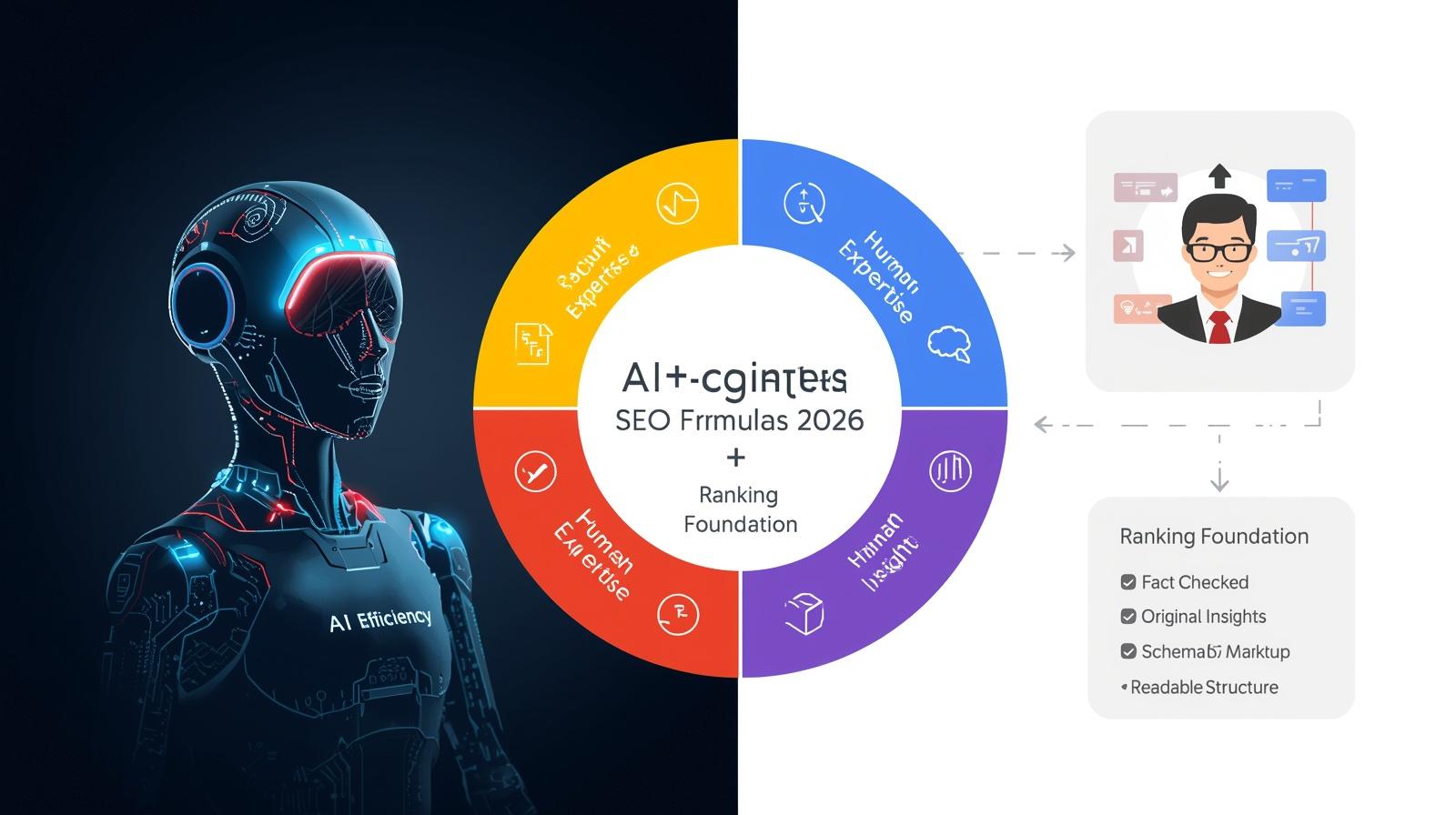
Artificial intelligence isn't the future of SEO anymore—it's the present. But here's what most people get wrong: AI alone won't rank your content in 2026. Google's latest algorithm updates have made one thing crystal clear: search engines reward pages. that combine machine efficiency with human insight, originality, and real-world expertise.
AI + Human Expertise = SEO Success
The winning formula isn't "AI versus humans." It's "AI plus human judgment." Use AI to speed up your research, drafting, and optimization. Then rely on your human expertise to add the originality, nuance, and credibility. that makes content truly valuable to searchers.
This guide walks you through a practical workflow for combining AI-assisted tools. With expert review to create content that ranks, attracts qualified traffic. And converts—all while avoiding penalties and staying ahead of Google's quality standards.
Understanding SEO in 2026: Beyond the Basics
The Evolution of E-E-A-T
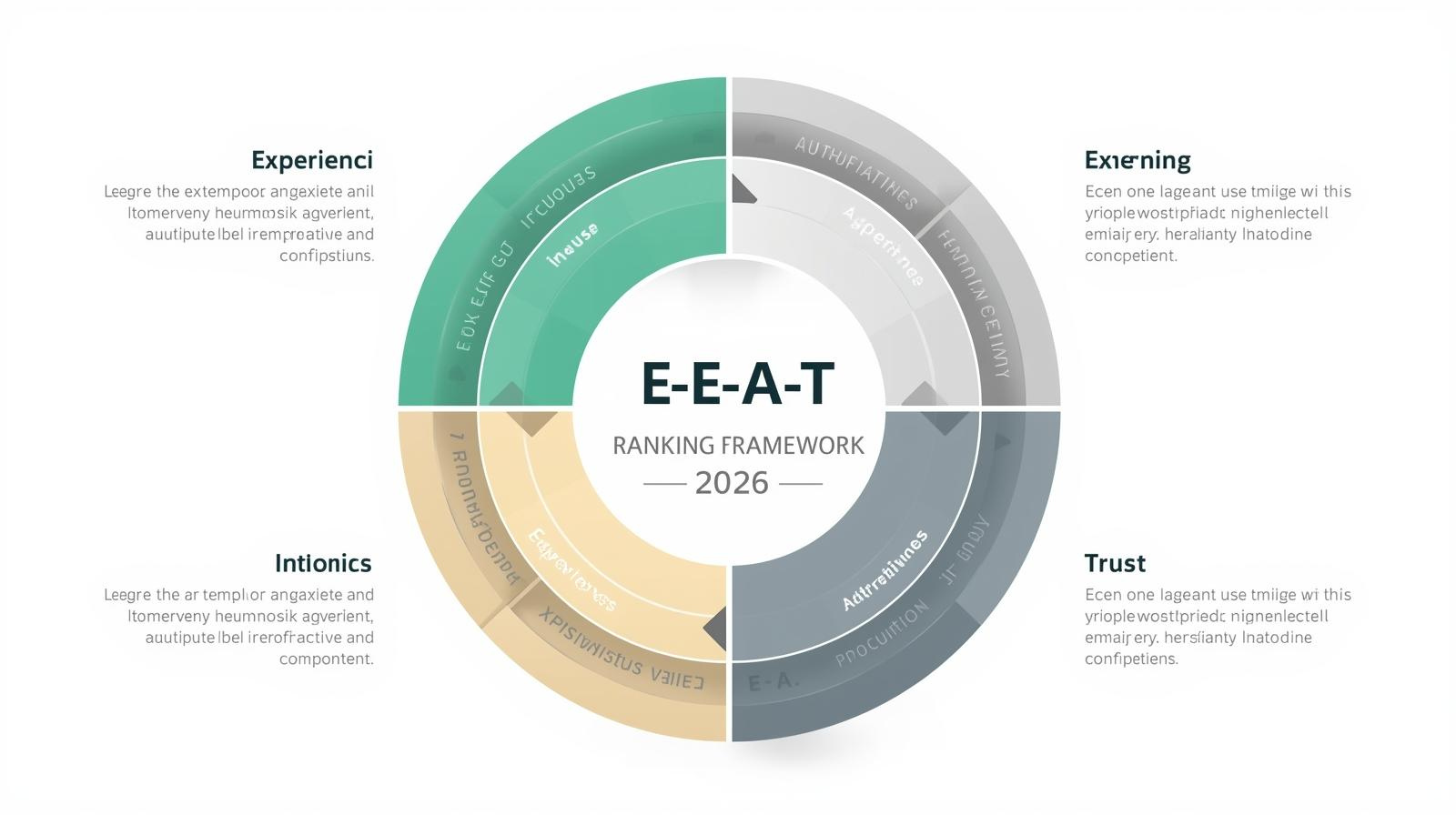
In 2026, Google’s E-E-A-T (Experience, Expertise, Authoritativeness, Trustworthiness) is no longer a "bonus"—it's a filter.
-
Experience: This is the biggest differentiator. Show you’ve actually done the work. Use "I" and "we" statements. Include original photos, failed tests, and "behind-the-scenes" data.
-
Expertise: Go beyond "what" and explain "why." Acknowledge the complexity of your topic instead of giving a generic summary.
-
Authoritativeness: It’s about being an entity. Are other experts citing you? Is your brand mentioned on Reddit or industry forums?
-
Trustworthiness: Be transparent. Cite your sources clearly and maintain an updated author bio with verifiable credentials.
What Changed in Recent Core Updates?
Recent updates shifted focus away from keyword density toward User Intent Fulfillment and Information Gain. Google now effectively filters out "thin" AI content—the kind that just rephrases what’s already on page one. To rank today, you must add new information to the conversation.
Building Your AI-Assisted Content Workflow
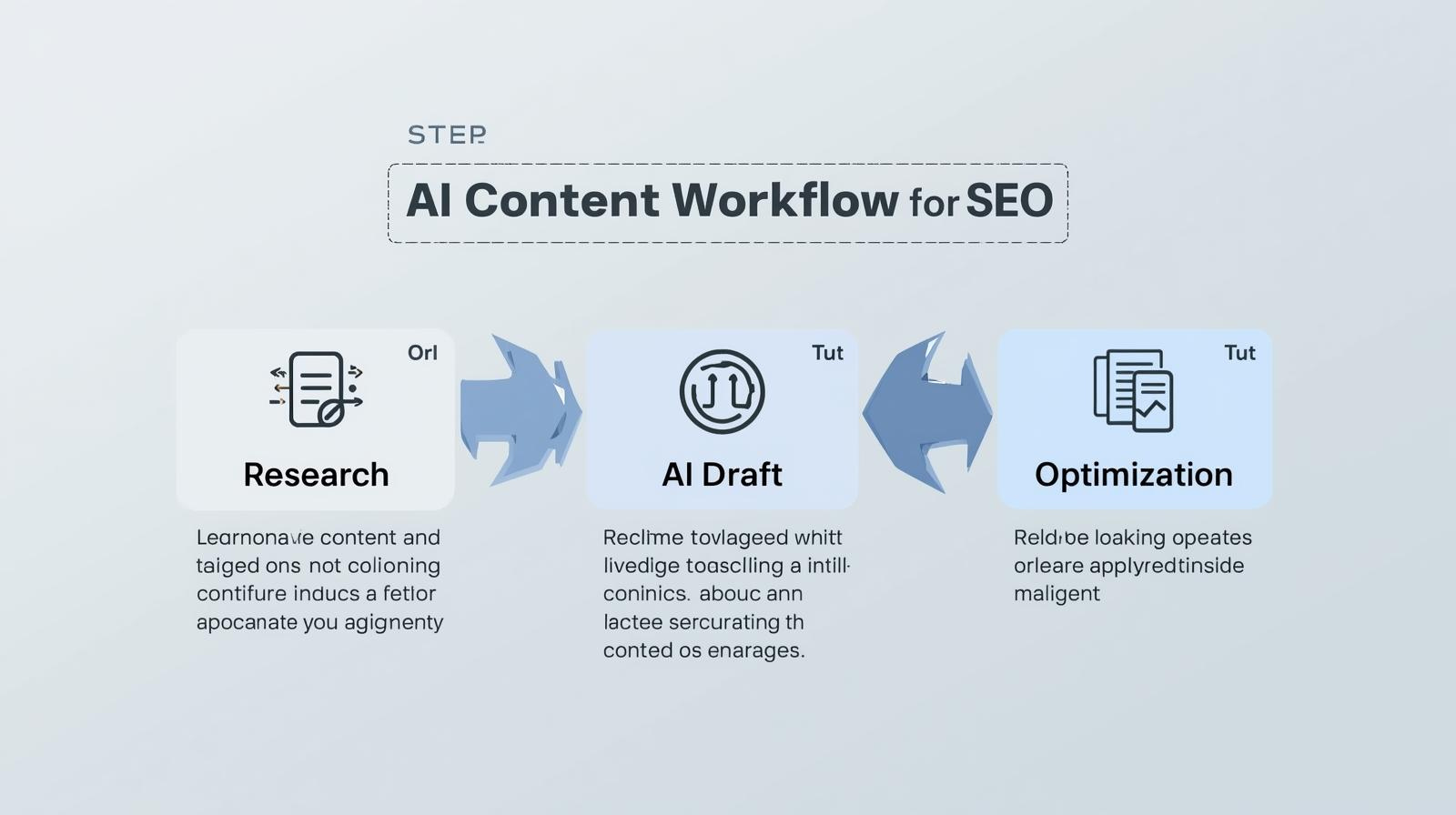
Phase 1: Research with Purpose (30–50% of your time)
Before writing, define the landscape.
-
Identify Gaps: Use AI to find what competitors missed.
-
Map Intent: Are users looking for a quick answer or a deep dive?
-
Gather Proof: Collect original datasets or expert quotes to bake into the draft.
Phase 2: Drafting with AI Assistance
Think of AI as your "First Draft Partner."
-
Prompt with Context: Don't just ask for an article. Feed the AI your unique research notes and specific brand voice guidelines.
-
Structure for Skimmability: Use AI to generate H2 and H3 tags that directly answer common FAQs found in "People Also Ask" boxes.
Phase 3: The Human "Polish" (The Ranking Factor)
This is where 40% of your effort should go. You must:
-
Inject Personality: Rewrite the introduction manually. AI intros are often repetitive and "fluffy."
-
Verify Everything: AI can hallucinate. Check every stat against a 2025 or 2026 source.
-
Vary Sentence Rhythm: AI tends to write sentences of similar lengths. Break that pattern—use short, punchy sentences followed by more descriptive ones to feel more "human."
|
Category |
Checklist Item |
|
E-E-A-T |
[ ] Includes first-person experience or a case study? |
|
Quality |
[ ] Does it provide "Information Gain" (new facts or angles)? |
|
Technical |
[ ] Is the LCP (Largest Contentful Paint) under 2.5 seconds? |
|
On-Page |
[ ] Is Article or FAQ Schema implemented? |
|
Readability |
[ ] No paragraphs longer than 4 lines? |
Pro Tip: In 2026, "Expert Citations" are the new backlinks. Instead of just linking to a site, quote a specific expert and link to their LinkedIn or professional profile. This signals massive trust to Google’s crawlers.
The Pillars of Content Quality That Rank
1. Depth Over Density
Google rewards comprehensive coverage. Long-form content (1,500-3,500 words) that thoroughly explores a topic outranks thin, keyword-focused articles. But length alone doesn't matter—it must be substantive.
2. Originality and Real-World Experience
This is what AI can't replicate at scale. Your content must include:
-
Original data, surveys, or research
-
Case studies with measurable results
-
Personal testing and hands-on experience
-
Frameworks you've developed and tested
3. Clear Structure and Readability
Google's AI systems favor content that's easy to parse. Use:
-
Descriptive heading hierarchies (H1, H2, H3)
-
Short paragraphs (2-4 sentences)
-
Bullet points and numbered lists
-
Meaningful subheadings that answer user questions
4. Semantic Relevance (Not Keyword Stuffing)
Write naturally using synonyms, related terms, and contextual variations. "Content marketing strategy," "content marketing tactics," and "how to plan content marketing" should all appear naturally in your text—not forced for SEO.
5. Schema Markup and Technical SEO
Add structured data to help Google understand your content:
-
Article schema for blog posts
-
FAQPage schema for Q&A sections
-
HowTo schema for instructional content
-
Product schema for reviews
Your Content Checklist Before Publishing
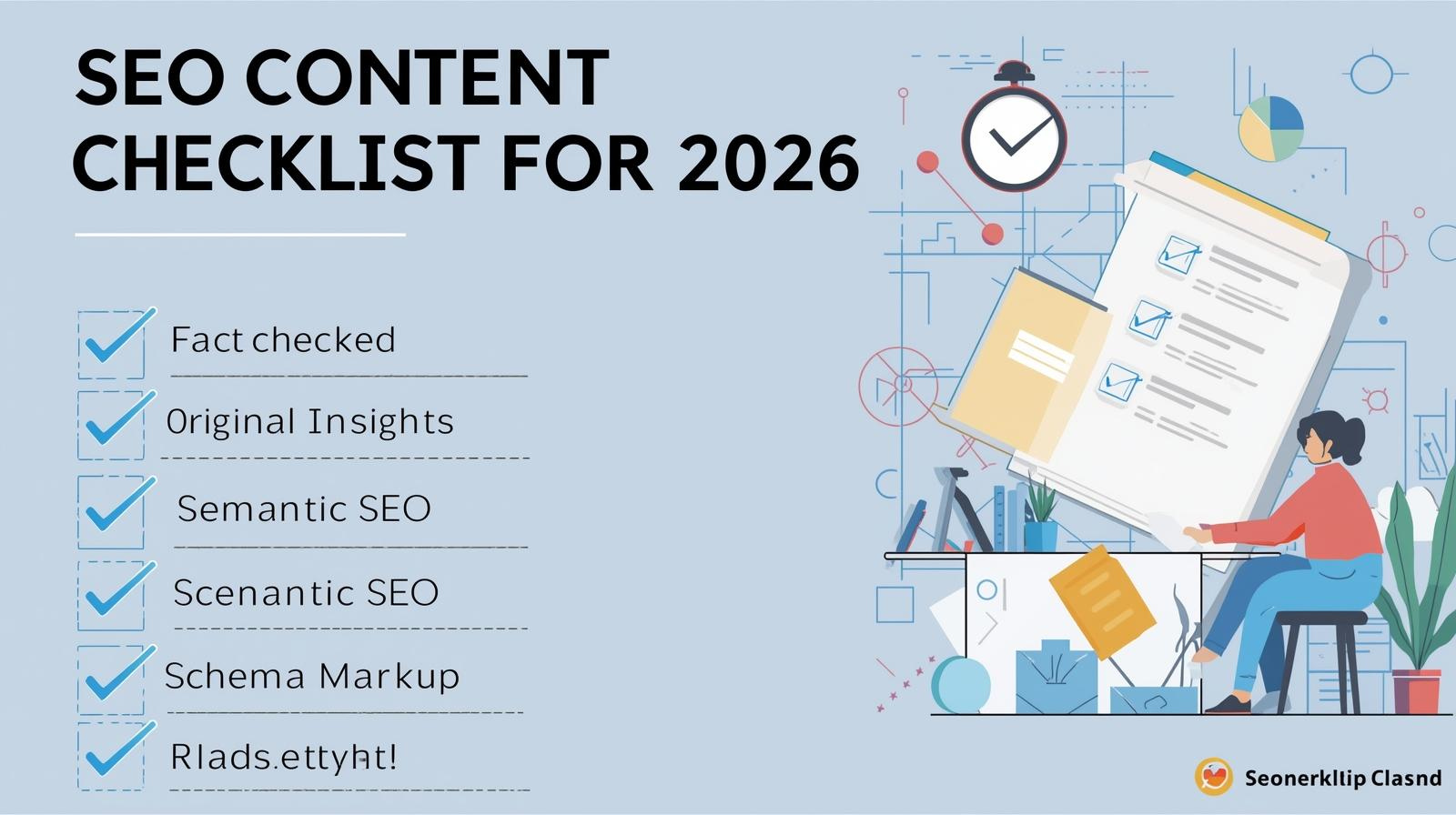
Pre-Publication Quality Audit
Content Quality:
-
[ ] Every factual claim is verified against original sources
-
[ ] Statistics and data are current (updated within 12 months)
-
[ ] Original insights, case studies, or experience are included
-
[ ] Expert quotes and citations are present
-
[ ] Content answers the target search query completely
E-E-A-T Signals:
-
[ ] Author expertise is clear (bio, credentials, or byline)
-
[ ] Multiple credible sources are cited
-
[ ] Limitations or nuances in the topic are acknowledged
-
[ ] Content reflects personal experience or testing
Technical & On-Page:
-
[ ] Title and meta description match user intent
-
[ ] Heading structure is logical (one H1, proper H2/H3 flow)
-
[ ] Internal links point to related content
-
[ ] Schema markup is implemented
-
[ ] URL is descriptive and includes target keyword
Common Mistakes to Avoid
Even with good AI tools, many publishers stumble on execution. Here are the pitfalls to sidestep:
Publishing AI drafts without human review: This is the fastest way to produce thin, generic content that doesn't rank.
Prioritizing keywords over user intent: Write for people first, search engines second.
Ignoring freshness: Set a schedule to audit, update, and refresh older content every 6-12 months.
Missing expertise signals: Don't hide your credentials or experience. Make it visible to users and search engines.
Over-optimizing: Natural writing with semantic relevance outranks keyword-stuffed text every time.
Measuring Success Beyond Rankings
Track these metrics to ensure your AI-assisted content strategy is working:
-
Organic traffic quality: Sessions with longer dwell time and lower bounce rate
-
Click-through rate (CTR): How often your content appears in results and gets clicked
-
Conversion signals: Email signups, demo requests, or purchases from organic search
-
Content freshness: Update frequency and recency of cited information
-
Ranking movement: Track keyword positions over time, especially for competitive terms
Final Recommendations for 2026
Your Action Plan
1. Embrace the AI + Human hybrid model. AI speeds up low-skill work (research, drafting, organization). Humans add high-value work (expertise, verification, originality).
2. Prioritize user intent over keywords. Answer the real questions searchers are asking, not the ones with the highest search volume.
3. Build topic authority through depth. Create comprehensive guides and linked topic clusters that establish your expertise.
4. Maintain a rigorous publishing process. Every piece of content should be reviewed, fact-checked, and enhanced by a human expert before publication.
5. Update regularly. Schedule quarterly audits to refresh statistics, add new insights, and maintain freshness signals.
In 2026, SEO success isn't about gaming algorithms or finding shortcuts. It's about creating content that's genuinely useful, thoroughly researched, and backed by real expertise. AI makes this faster and more efficient—but only when combined with human judgment and rigor.
The publishers winning in search right now are those who view AI as a productivity tool, not a content factory. They use it to handle routine work, then invest the time they save into research, verification, and original insights.
That's the formula for ranking in 2026. Start today, and you'll be ahead of the competition that's still trying to rank thin AI content.
Frequently Asked Questions
1. Can AI content rank on Google in 2026?
Yes, AI content can rank if it is reviewed, fact-checked, and enhanced with real human expertise. Google prioritizes helpful, original content that demonstrates E-E-A-T signals.
2. What is E-E-A-T in SEO?
E-E-A-T stands for Experience, Expertise, Authority, and Trust. It is a framework Google uses to evaluate content quality and credibility.
3. Is AI-generated content bad for SEO?
No. AI-generated content is not inherently bad. However, publishing unedited AI drafts without human review can result in low-quality content that fails to rank.
4. How long should SEO content be in 2026?
High-ranking content typically ranges between 1,500 to 3,500 words, depending on search intent and topic complexity. Depth matters more than word count.
5. How often should I update SEO content?
Content should be reviewed and refreshed every 6–12 months to maintain accuracy, relevance, and freshness signals.