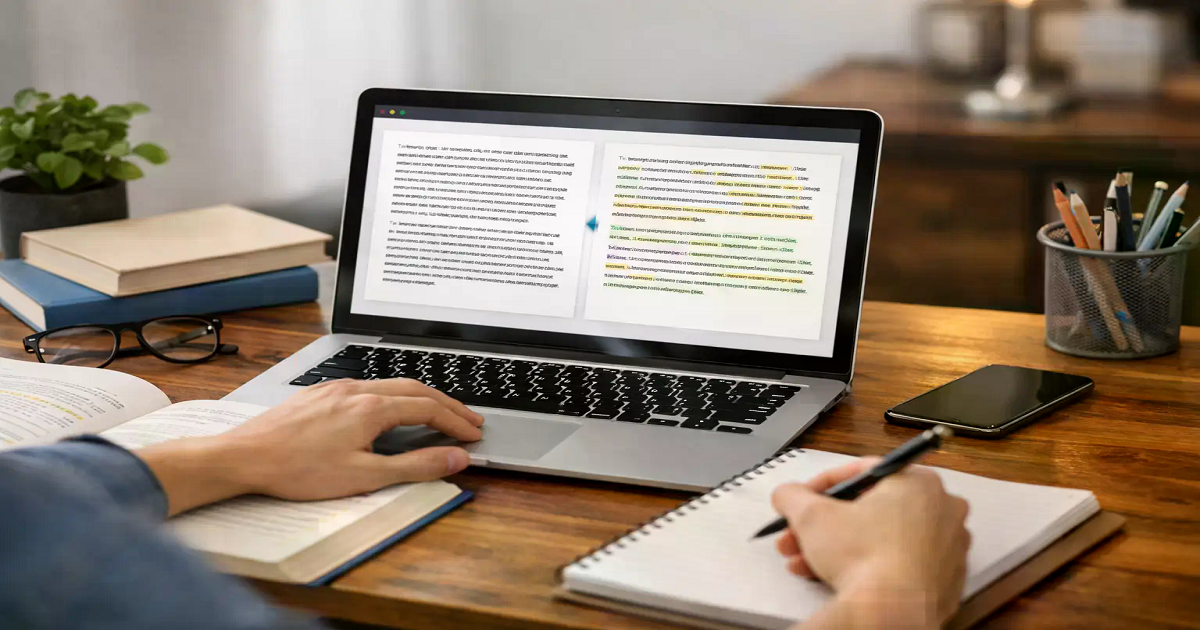
A rough draft at 11:47 p.m. usually looks the same - repeated phrases, awkward sentences, and a paragraph that somehow says the same thing three different ways. That is exactly where a paraphrasing tool for students can help. Used properly, it saves time, improves readability, and gives you a cleaner version of your ideas without forcing you to start from scratch.
Students rarely need fancy software for this job. They need something fast, clear, and easy to use in a browser. Whether you are tightening an essay, simplifying a research summary, or reworking a sentence that sounds too close to the source, the right tool can make writing feel less frustrating and more manageable.
What a paraphrasing tool for students actually does
A paraphrasing tool rewrites text while keeping the original meaning as close as possible. In practical terms, that means changing wording, sentence structure, and phrasing so your writing sounds fresher and less repetitive. For students, that can be useful when a first draft feels clunky or when a borrowed idea has not yet been expressed in their own voice.
That said, not every rewrite is automatically better. A strong tool helps you improve flow and clarity, but it should still leave you in control. If it changes key terms, weakens an argument, or makes a sentence sound unnatural, you need to edit the result instead of pasting it straight into your assignment.
This is the real trade-off. Speed is helpful, but accuracy matters more when grades are involved.
Why students use paraphrasing tools
Most students are not looking for shortcuts in the lazy sense. They are trying to solve specific writing problems quickly. Sometimes the issue is repetition. Sometimes it is tone. Sometimes they understand the topic but cannot phrase the idea well enough for an academic assignment.
A paraphrasing tool can help when you are trying to reduce wordiness, improve sentence variety, or turn a confusing paragraph into something easier to read. It is also useful for non-native English speakers who want cleaner wording without spending an hour rewriting every line manually.
There is also a simple productivity benefit. When deadlines stack up, browser-based writing tools remove friction. You paste text, review the output, and keep moving. That matters when you are balancing coursework, part-time work, and everything else around school.
Where a student paraphrasing tool helps most
The best use cases are practical rather than dramatic. If your introduction sounds repetitive, a paraphrasing tool can offer alternate phrasing. If your conclusion is too long, it can help tighten the structure. If you have quoted too much in a draft, it can help you reshape supporting ideas into more original sentence patterns.
It can also help with notes. Students often copy passages into study documents and later need to turn those notes into their own wording. A tool can speed up that transition, especially when paired with careful checking.
For research-based writing, it depends on the subject. In humanities or social sciences, sentence flow and tone often matter a lot, so paraphrasing support can be useful. In technical subjects, you need to be much more careful. Specific terminology should not be swapped casually, because one altered word can change the meaning of the entire sentence.
What to look for in the best paraphrasing tool for students
Speed matters, but it is not the only thing that matters. Students need a tool that produces readable text, not just different text. If the output sounds robotic or overly formal, it creates more editing work than it saves.
A useful tool should be easy to access, simple to use, and capable of generating quick rewrites without unnecessary setup. Free access is another major factor. Many students are budget-conscious, so paying for advanced writing software is not always realistic.
Accuracy is where the real value sits. A good paraphrasing tool should preserve the main idea, avoid bizarre word choices, and keep grammar reasonably clean. It also helps if the tool works well alongside other writing utilities such as grammar checking and plagiarism checking. Those combinations make the writing process more efficient because students can draft, rewrite, review, and polish in one workflow.
For users who want quick, browser-based support, platforms such as Small SEO Tools UK fit that need well by focusing on instant-access utilities instead of heavy software.
What a paraphrasing tool cannot do for you
This part matters more than most tool pages admit. A paraphrasing tool cannot replace understanding. If you do not understand the source material, rewriting it will not suddenly make your assignment stronger. It may only give you a more polished version of a weak point.
It also cannot handle citation decisions for you. If an idea comes from a source, you still need to cite that source properly, even if the wording has changed. Paraphrasing is not the same as making borrowed content original in an academic sense.
And sometimes the tool will simply miss the tone. Academic writing often needs precision. If the output becomes vague, too casual, or overly complex, you have to revise it manually. The tool helps with momentum, but the final responsibility stays with the student.
How to use a paraphrasing tool without hurting your grade
The smartest approach is to treat the tool as a drafting assistant, not an autopilot button. Start with your own sentence or paragraph whenever possible. Then use the tool to explore alternate versions. Compare the options, keep what improves clarity, and reject anything that changes the meaning.
After that, read the rewritten text out loud. This quickly exposes awkward phrasing and unnatural vocabulary. If it does not sound like something a real person would write, it probably needs work.
You should also check facts, names, dates, and technical terms. Automated rewrites sometimes alter details that should stay exactly the same. Finally, run a grammar check and review for citation issues before submitting anything.
This extra minute or two is what separates helpful tool use from careless tool use.
Common mistakes students make
One common mistake is paraphrasing too close to the source. If the structure is nearly identical and only a few words have changed, that is still risky. Another mistake is trusting the first result without reading it carefully. Fast output is convenient, but convenience should not override quality control.
Students also get into trouble when they use paraphrasing tools to rewrite material they have not read properly. That often leads to vague, generic sentences that sound polished but say very little. Teachers notice that.
There is also the temptation to use the tool on an entire paper in one go. Usually, that is a bad idea. Paragraph-by-paragraph use tends to work better because you can review meaning, transitions, and tone more carefully.
Is a paraphrasing tool worth it for students?
For most students, yes - if expectations are realistic. A paraphrasing tool is worth using when it helps you write faster, reduce repetition, and improve readability without adding confusion. It is especially useful for drafts that already have decent ideas but need cleaner expression.
It is less useful when the assignment requires deep analysis that has not yet been done. In that case, no tool can supply missing thought. It can only rearrange what is already there.
That is why the best results come from combining your own understanding with a tool that saves time on sentence-level editing. Think of it as support for the writing process, not a replacement for it.
The real advantage: less friction, better output
Students do not need more complexity. They need practical tools that remove barriers and help them finish strong. A good paraphrasing tool for students does exactly that. It helps turn rough wording into clearer writing, cuts down on repetition, and gives you a faster route from draft to final version.
The key is using it with judgment. Keep your meaning intact, review every rewrite, and use the tool to improve your work rather than hide weak thinking. When you do that, you get the real benefit students actually care about - cleaner writing, less stress, and more time to focus on the parts of school that need your brain most.