
Artificial intelligence has changed the way we create content. Tools can now rewrite a blog post in seconds, restructure a webpage in minutes, and produce thousands of words on demand. But here's the problem most writers and marketers run into:
After running their content through an AI rewriter, it sounds like a robot wrote it.
The personality is gone. The humour has been stripped out. The phrases you spent years refining — vanished. The result is technically correct content that feels hollow and forgettable.
This guide is about solving exactly that problem. You'll learn how to use AI rewriting tools strategically, so you get the speed and efficiency benefits without sacrificing what makes your content uniquely yours.
💡 Quick tip: Before rewriting anything, use the free AI Content Detector at smallseotools.co.uk to benchmark your existing content — then compare after AI rewriting.
1. Why Your Voice Matters More Than Ever in 2026
With AI-generated content flooding the internet, Google's algorithms are getting better at identifying generic, soulless text. According to Google's Helpful Content guidelines, pages that exist primarily to satisfy search engines — rather than genuine human readers — are penalised.
Your voice is what differentiates your content. It's the reason your readers come back. It's the trust signal that converts visitors into customers. No AI, no matter how advanced, can replicate your specific combination of expertise, experience, and personality.
The goal, then, is not to replace your writing. It's to use AI as a time-saving assistant — one that handles the heavy lifting of restructuring and rewording, while you retain editorial control over what makes it yours.
Related: What is AI Content Detection and How Does It Work?
2. The Problem with Standard AI Rewrites
Most AI rewriters work by identifying sentence structures and replacing words with synonyms or alternative phrasings. The result often has these telltale problems:
⦁ Overly formal or corporate-sounding language
⦁ Loss of first-person perspective and personal anecdotes
⦁ Repetitive sentence structures ("It is important to note that...")
⦁ Removal of contractions, colloquialisms, and regional phrases
⦁ Stripped-out humour, irony, or rhetorical questions
⦁ Generic transitions that kill narrative flow
This is why so many writers try an AI rewriter once and never go back. The output feels like it was written by an intern who has never met you. But the solution isn't to avoid AI tools — it's to use them correctly.
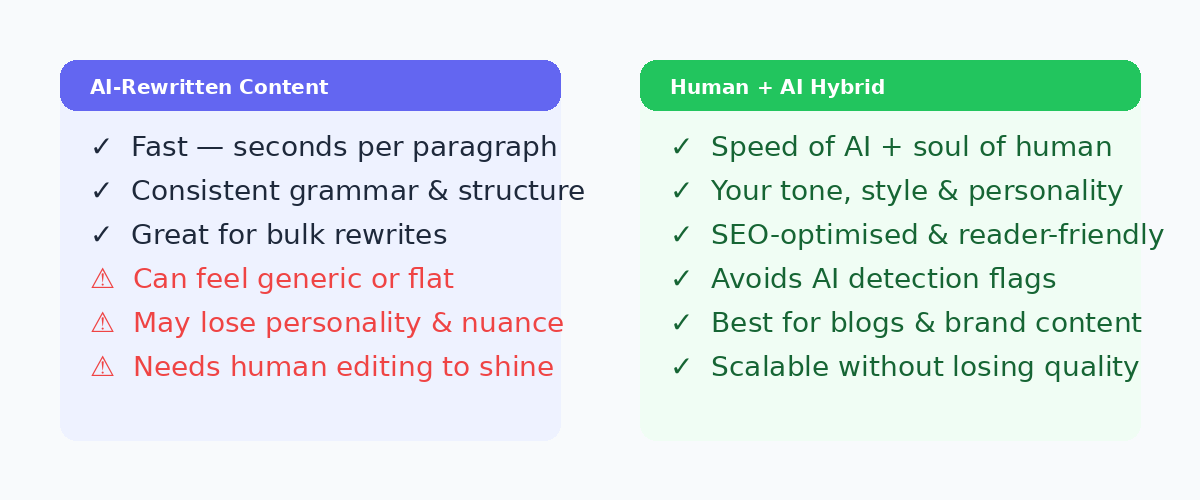
Figure 1: AI rewriting alone vs. the Human + AI hybrid approach — key differences
3. The 5-Step Human + AI Hybrid Method
The most effective content creators in 2026 aren't choosing between writing manually or using AI. They're combining both in a structured workflow. Here's the method:
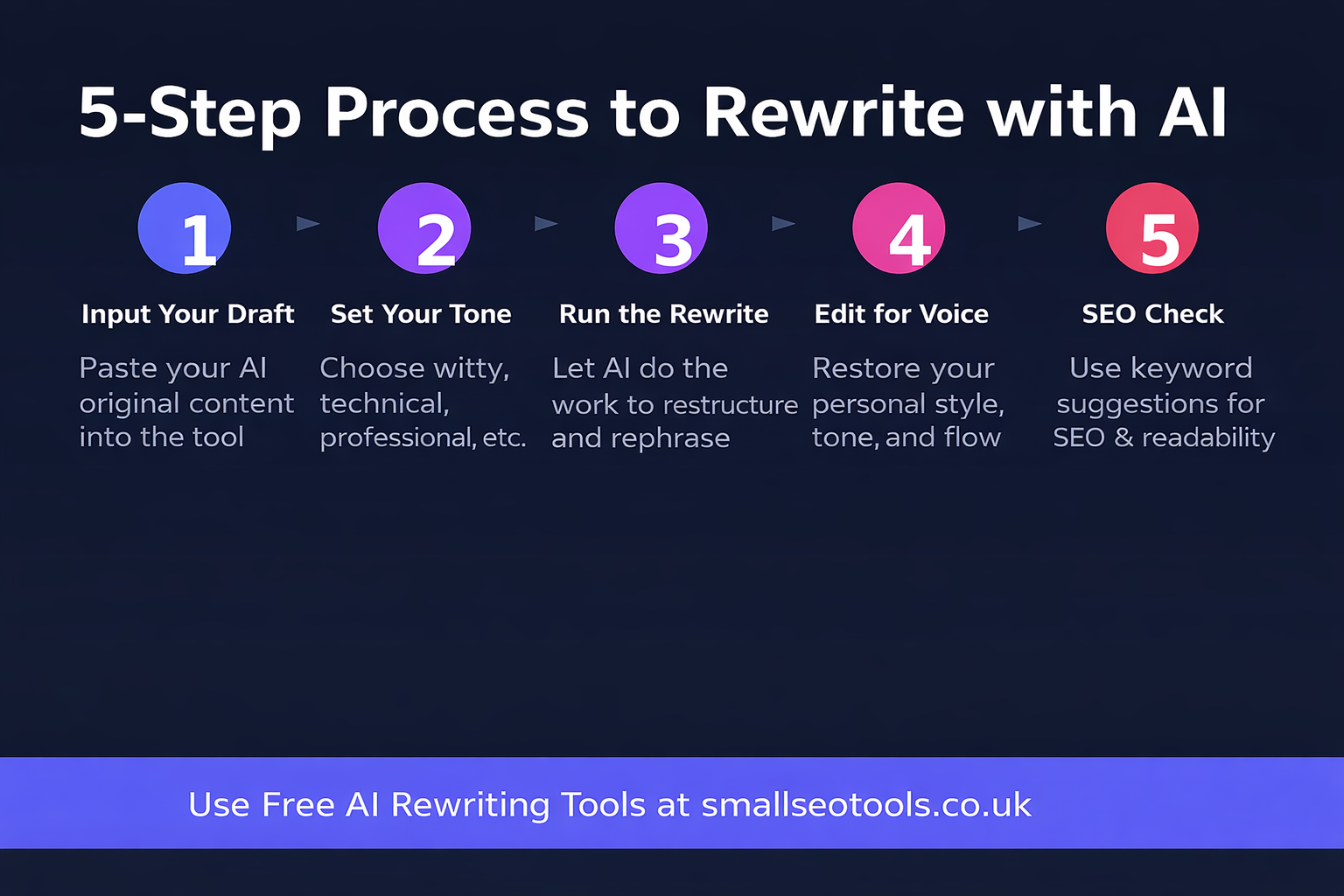
Figure 2: The 5-step process for AI-assisted rewriting that preserves your voice
Step 1 — Always Write Your First Draft Yourself
This is non-negotiable. Your first draft — even if rough and unpolished — should be written by you. This gives the AI something human to work with, rather than generating generic content from scratch. A 300-word rough draft will produce a far better AI-rewritten output than a blank prompt.
Step 2 — Prepare a "Voice Prompt" Before Rewriting
Before pasting your text into any AI rewriter, create a short voice brief. Something like: "Rewrite this in a conversational UK English tone. Keep any first-person references, idioms, and rhetorical questions. Do not add formal transitions like 'Furthermore' or 'It is worth noting'." The more specific your instructions, the better the output.
Step 3 — Use the AI Tool for Structure, Not Just Synonyms
Good AI rewriting tools can do more than swap words — they can improve the logical flow of your arguments, break up dense paragraphs, strengthen weak sentences, and add SEO-friendly subheadings. Use these structural improvements, but always review the output line by line.
Try the Free AI Article Rewriter at SmallSEOTools.co.uk — it allows tone control for better voice preservation.
Step 4 — Edit Ruthlessly After the AI Rewrite
Read your AI-rewritten content out loud. If you stumble on a sentence, a real reader will too. Delete or rewrite any line that:
⦁ Doesn't sound like something you would say
⦁ Is technically correct but emotionally flat
⦁ Uses a phrase you would never normally use
⦁ Adds padding without adding value
Step 5 — Run Final SEO and Readability Checks
Once your content sounds like you again, run it through readability and keyword tools. Aim for a Flesch Reading Ease score appropriate to your audience (60–70 for general audiences, higher for casual blogs). Check your keyword density is natural — typically 1–2% for your target phrase.
Use the Keyword Density Checker and Readability Checker on SmallSEOTools.co.uk to verify before publishing.
4. 7 Practical Tips to Protect Your Voice
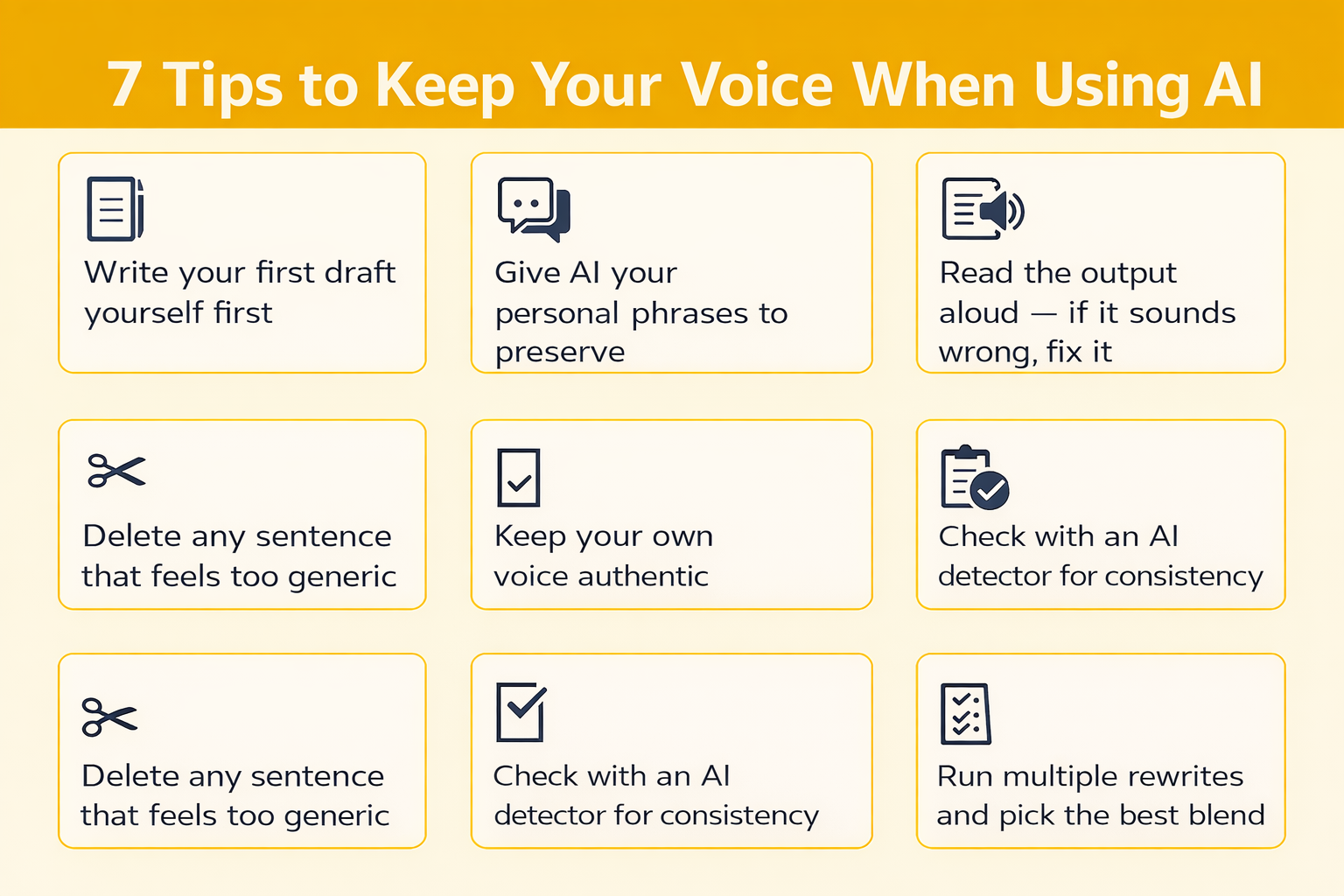 Figure 3: Seven actionable tips for preserving your personality in AI-rewritten content
Beyond the core 5-step method, here are tactical tips that experienced content creators use to maintain voice consistency:
1. Create a personal style guide. Document your preferred tone, the phrases you use, topics you care about, and words you'd never say. Share this with any AI tool's prompt or with any freelance writer.
2. Keep a "voice bank". Save your best-performing paragraphs in a document. When AI rewrites feel flat, blend in phrases from your voice bank to restore authenticity.
3. Use AI for the middle, not the beginning or end. Your intro and conclusion are where your voice matters most. Write these yourself every time. Use AI only on body paragraphs where structure is more important than personality.
4. Vary your rewriting approach. Try the 4. AI Paragraph Rephrase tool for sentence-level rewrites, and the 4. AI Content Extender when you need to expand thin sections without losing flow.
5. Compare three versions. Run your content through two or three AI rewriting approaches and mix the best elements. Different tools interpret "conversational" differently — blend the results.
6. Read competitor content for contrast. This reminds you what generic sounds like, making it easier to spot when your own content has drifted toward bland.
7. Run an AI detector check. Use the 7 AI Content Detector at SmallSEOTools.co.uk to see how detectable your rewritten content is — then humanise the flagged sections further.
5. The SEO Angle: How Voice Affects Rankings
There's a common misconception that SEO is purely technical — keywords, backlinks, and metadata. But Google increasingly weighs engagement signals like dwell time, bounce rate, and pages per session. Content that sounds authentic and human keeps readers on the page longer. Content that reads like a machine wrote it drives them away.
E-E-A-T (Experience, Expertise, Authoritativeness, Trustworthiness) — Google's quality framework — rewards content where a real person's experience and knowledge is evident. AI-rewritten content that has been humanised properly can score well on E-E-A-T. Generic AI output that hasn't been edited cannot.
📌 SEO Note: For UK websites, using natural British English (colour vs color, optimise vs optimize, etc.) is also a local ranking signal. Ensure your AI rewriting tools don't Americanise your content.
Pair great content with solid on-page SEO fundamentals. Use your target keyword in the title, H1, one H2, the first paragraph, and the meta description. Keep meta descriptions between 150–160 characters. Use the
Meta Tag Generator at SmallSEOTools.co.uk to create optimised meta tags for every page you publish.
6. Recommended Tools & Further Reading
The following free tools on SmallSEOTools.co.uk can support your AI content rewriting workflow:
- AI Article Rewriter — rewrite full articles with tone controls
- AI Paragraph Rephrase — rephrase individual paragraphs without affecting whole article
- AI Content Detector — check if content reads as AI-generated
- Plagiarism Checker — verify originality after rewriting
- Grammar Checker — clean up any errors introduced during rewriting
- Readability Checker — ensure your content is reader-friendly
- Keyword Density Checker — confirm natural keyword distribution
- Meta Tag Generator — optimise titles and descriptions for search
For external reference on best practices, you may also consult:
- Google's Helpful Content Guidelines — the official standard your content should meetGoogle'
- Moz: What is E-E-A-T? — understanding Google's quality rating framework
- Semrush: AI Content Writing Guide — advanced strategies for AI-assisted content workflows
Conclusion: AI is Your Assistant, Not Your Ghostwriter
The writers and marketers who will win in 2026 aren't the ones who use AI to replace their thinking — they're the ones who use it to amplify their output without losing what makes their content worth reading.
AI rewriting tools are extraordinary at handling the mechanical side of content: restructuring arguments, varying sentence length, correcting grammar, and hitting SEO targets. But they cannot manufacture experience, inject earned credibility, or replicate the specific way you see the world.
Use AI for the parts of writing that feel like work. Save your voice for the parts that matter.
🔗 All tools referenced in this article are free to use at smallseotools.co.uk — no account required.
.png)